Friday, 21 September 2012

Yucatan & the (British) Empire

The US-Mexican war of 1846-8 and the Franco-Austrian involvement in Mexico in Maximilian's Adventure (1863-67) are fairly well known, but less so is the involvement of the British Empire in Mexican history. Or more specifically, Mexico´s involvement in the Empire.

It all started in the 1840s when General Santa Anna (he that lost the US-Mexican War) invaded the quasi independent Yucatan region to restore Mexican control. The "Napoleon of the West" was no more successful there than against the Americans, but he managed to start a civil war there that continued off and on until 1901. The population of the Yucatan could be grouped into three main classes, the pure bred Spanish in the top jobs, the Mayan Indians, and the Mestizos of mixed Spanish Indian blood in the middle.

 Northern British Honduras and the Yucatan, after A.B. Ellis

As the war became increasing bloody many Mestizos fled across the border to British Honduras (modern Belize) to escape Mayan attacks. Between 1848 and 1856 more than 10,000 crossed the Rio Hondo, the river that now served as the border, and sought refuge in northern Belize. Many settled in the Corozal District where the local magistrate, James Blake, let them develop sugar plantations, others in the Orange Walk District. Before this the interior of British Honduras was sparsely populated, most of the people there in the Mahogany industry, with timber floated down the New River into Corozal Bay, then to Belize City and shipped abroad. The logging industry was in decline however, so the opening up of the interior to sugar plantations came at an opportune time for the British.

The problem was that Belize's rather meagre defences faced the sea, against the French, Spanish or Americans. The interior was poorly defended, there had never been much of a point. But as the "War of the Castes" spread across the border, this was about to change.

The Icaiche

Just across the border from Corozal and Orange Walk were the Icaiche or Chichenha Maya  , it was they who had driven the Mestizos across the border. The Maya to the north, the Chan Santa Cruz Maya or Cruzob, were "de facto" recognised as a separate nation by the British, and there was considerable trade between them, but the Icaiche under Marcos Canul were a different story. Canul raided the Mexicans, the Cruzobs, and increasingly, against the British. The position of the Imperial Mexican Government was somewhat equivocal about this. In general the Yucatan was one of the more loyal parts of the Franco-Mexican empire, and there was even a back up plan to withdraw to the Yucatan if Mexico proved too hot and start again, annexing the small countries of Central America. An edict was issued claiming Belize for the Imperial crown. In this respect, if Canul drove British settlers out of the area he was worth tolerating, and the French army were probably not too upset to see the British Empire humiliated.

In May 1866 Canul attacked Qualm Hill, killing two people and kidnapping 79 more, who were only returned after a ransom of $3,000 was paid. A small detachment of 140 men of the 4th West Indian Regiment under Major MacKay caught up with him in December but it did not go well, as desecribed in Colburn's United Service Magazine and Naval and Military Journal (Volume 36).

"They proceeded in a fleet of canoes up the tortuous course of the River Belize, a distance of one hundred and fifty miles, and disembarked at a point within sixteen or twenty miles of San Pedro, and yet in a direct line, less than sixty miles from Belize. Here they entered upon what resulted in a terrible and unfortunate march. All night the soldiers toiled manfully through mud and slush, under an almost incessant downpour of rain, and in the morning were met by a force of the enemy and a fight ensued. Volleys were interchanged, resulting in eighteen or twenty casualties on our side, and probably the like on the part of the enemy; for Indians invariably carry off their dead and wounded as they fall. Both sides, however, retreated from the field, leaving the action indecisive, while the unfortunate Commissioner, by some unexplained chance falling into the hands of the enemy, no doubt, added another to the victims of their cold-blooded cruelty."

Next January, Canul raided the village of Indian Church, and left a letter laying claim to the whole of Belize, and demanding 19,000 pesos a year rent. This was too much, a militia was organised and an Expeditionary Force of the 4th West Indians, the militia and a rocket tube were dispatched to the Yucuatan. This made 300 men, but it was the rocket tube that made the most impression on the Maya. Artillery was impossible in the terrain but the rocket tubes were easily portable and could burn villages to the ground from a distance. After raids on the Icaiche capital  at San pedro, and then other centres, it looked like Canul had been taught a lesson. He hadn´t.

Raiding started again almost immediately, and in 1870 Canl occupid Corozal. The 4,500 population were mostly refugees and put up no resistance, though they put in huge claims for compensation to the British government afterwards. The last raid was on Orange Walk in 1872.

The Orange Walk Raid, September 1st 1872

Orange Walk in 1872, after A.B. Ellis (1885)

Unlike Corozol, Orange Walk had a garrison, although it was woefully unprepared for attack, not least because of a rather suspicious reluctance of the Mestizos to have an official British presence in their midst. As early as 1868 the British commander was complaining that the townsfolk were trying to deny fresh water to the garrison.

The garrison were housed in a small complex in the centre of the town, 36 men of the First West India Regiment.The West Indian regiments were composed mainly of black soldiers and British officers, the troops having a distinctive "Zouave" type uniform of red fez with a white turban, red sleeveless jacket over a white shirt and dark blue breeches. In Orange Walk the troops were in a 60 x 20 ft barracks, Lieutenant Graham Smith and Staff Assistant Surgeon Edge in Offiecrs Quarters nearby. The rest of the town of 1,200 was formed from small thatched houses and stores, with a few of the wealthier residents in fortified houses.

 The 1st West India Regiment at the time, A.B. Ellis

On that quiet Sunday morning there was no warning whatsoever of an attack, until Canul's 150 men erupted into the town, one group separating to loot the stores, another two groups attacking the barracks, one to the south east behind log piles by the river, the other sheltering in houses to the southwest. Such was the surprise that Smith and Edge were taking their morning baths at the time and barely had time to bolt through gunfire to the barracks, Dr Edge apparently  "in a state of nudity". Their situation was not not much better there (though presumably Edge found something to wear). There were two problems, a) the thin wood and plaster walls were not bullet proof, b) apart from a few sentrys all the troops were unarmed, ammunition being stored in the guardroom, the key to which Smith had left in his house! Iron bedsteads were used to fortify the walls and Lt Smith and Staff Sergeant Belizario ran back to get the key, somehow running the gauntlet of fire without getting hit.

Lt. Smith took up position at the door on the western side, but within minutes he fell with a serious wound, and private Lynch fell dead at his side. Command now rested with Sergeant Belizario and Dr. Edge, who kept up such a good fire that the Maya decided to burn the barracks rather than storm it. This seemed easy enough, but all they managed to do was burn down the nearby houses, in fact helping the garrison by clearing the cover around, so the Indians had to withdraw back to the log piles.
The next development was unexpected by both sides. About noon two white men appeared behind the Mayan ranks, shooting left and right and then running for the barracks. These were Mr. J.W. Price and Mr. O.E.Boudreaux, not British at all but two ex-Confederates who had settled in the area and decided to lend a hand. This enraged the Indians but there was nothing they could do except keep firing which they did until about 1-30. By 2pm all seemed quiet, and when Sgt. Belizario went out to check the enemy had gone.

The raid had left three dead in the town, two soldiers and a boy at the fortified house of Don Escalente in the town, 31 were wounded, including 14 soldiers. The Icaiche lost about 50 dead and many wounded, including, crucially, Marcus Canul, who died of his wounds.

Aftermath

Sgt. Belizario was awarded a well deserved Distinguished Conduct Medal , whilst Lt. Smith, Dr. Edge, and Lance Corporals Spencer and Stirling were all promoted and several of the Privates were highly commended.

The new chief of the Icaiche"General" Rafael Chan declared that he had never wanted to raid the British in the first place, and promised peace. Taking this with a pinch of salt, the authorities increased the defences of Orange Walk in 1874, and in 1876 built Fort Cairns, a proper bullet proof fort with a moat and draw bridge. Although further immigration from the Yucatan caused problems over the years the era of the Mayan raids was over.

Further reading

A fuller description of the Orange Walk raid can be found at the History of Orange Walk Town site
http://www.orangewalk.net/index.php?option=com_content&view=article&id=55&Itemid=55%28

Histry of the First West India Regiment by AB Ellis (1885). (Project Gutenberg ebook).

Saturday, 15 September 2012

Cossacks to Samarkand

We're accustomed to hearing of Russia, India, Afghanistan and Iran in the news, but in the nineteenth century they were not the only players in Central Asia, one of the most important was the Emirate of Bukhara.

 The Registan in the centre of Samarkand in 1869, Vasily Vereshchagin

What is now on the map as Uzbekistan was then the states of Kokland, Khva and Bukhara, with Afghanistan and Persia to the south and south west, China to the East, and most worryingly, Russia under the karakush, or black eagle of ill omen, to the north. This central position on the trade routes, especially the Silk Road, had made Bukhara rich, and it's two cities were wealthy with ornate architecture, that of the capital Bukhara "rivalled the finest architecture of the Italian Renaissance" whilst Samarkand was of course legendary, though well past it's best. The total population was about 2.5 million.

Army of the Emirate of Bukhara

On paper the army of Bukhara was strong, with 20,000 infantry (sarbaz)  and 200 cannon (topchi) . On paper. It was certainly experienced in raiding its neighbours and an attempt had been made to modernise it under the guidance of Osman, a renegade Cossack, who introduced the Russian drill book, and even Russian music, only to be executed by the Emir in 1868.

Flag of the Emirate of Bukhara


Osman's efforts did not succeed very well, most observers commentating that the infantry hardly knew how to march let alone shoot, and anyway only about 20% had firearms, mostly old flintlocks. Of the 200 field pieces, very few actually worked. It didn't help that most of the infantry were either slaves or impressed peasants who were so poorly paid that many had jobs outside the army to survive. The officers were either Uzbek nobles or favourites of the Emir, with virtually no formal military training. In fact the "army" of Bukhara was mainly an attempt by the Emir to have his own forces, and not rely on powerful nobles. Even so, cavalry was mainly in the form of siphais, feudal militia who owed their allegiance to nobles, not to the Emir. Again, these were useful for raiding, but very little use against formed regular troops.

Envoys from the South and the North

Unfortunately, the Bukharans were not only wealthy but arrogant. Two British agents captured in the 1840s, Charles Stoddart and Arthur Conolly (who coined the term "the Great Game"), were thrown first into a vermin pit before being beheaded, Khan Nasrullah, correctly assuming that Afghanistan protected him from retaliation from British India. The nearest equivalent to a buffer state ot the north was the Khanate of Kokland, centred on Kokland and Tashlent, which had held the Russians at bay for 20 years, but instead of allying with Kokland the Emirs of Bukhara tried to conquer it, weakening the state with raids and civil wars until it inevitably fell to the Russians under General Chernyayev; in 1867.

 Russian troops in Central Asia, 1871. Vasily Vereshchagin

The Russians then made demands on Bukhara. Quite modest demands concerning trade and the release of a captured Russian delegation, but demands none the less The end result would probably been the same whatever the Bukharan response, but the Emirate leapt into war. The Emirate, but not the Emir, the nobles in Bukhara clamouring to teach the Russians a lesson and the mullahs in Samarkand stirring up the masses for a holy war against the Russian infidel. The Bukarans had defeated a half hearted Russian incursion in 1866, mainly by using cavalry to deny foraging to the enemy, and this encouraged their over confidence.

Invasion

Eventually, by mid April 1868 the Emir gave in and led the army towards to the Zarafshan River, but there he stayed. Even when  the new Russian commander in the area, Konstantin von Kaufmann attacked Samarkand defeating local forces and storming the citadel. Kauffmann left 700 men as garrison and advanced on Bukhara taking one town at a time until on June 2nd the Emir turned to fight.

 Russian infantry in Central Asia, 1871. Vasily Vereshchagin.

With 14 guns and 6,000 Sarbaz dug in on the Zerbulak Heights and 15,000 Sipahi cavalry, the Bukharans looked strong. Any Russian attack had to wade chest high through a river, and then struggle across paddy fields. Kaufmman had only 3,500 Russians (21 companies of infantry, 20 guns  and 1,000 Cossack cavalry), as well as, reportedly, 280 Afghans under Iskandar Khan. These had been mercenaries for Bukhara, forming the garrison of Nur Ata, but when the local Bey delayed payment the Afghans took two fortress guns as payment and defected to the Russians. Anyway, Kaufmann simply stormed the Bukharan position and drove them off, with the loss of only 2 killed and 38 wounded.

The Russians now detached 6 companies, 200 Cossacks and 4 guns under the command of Colonel Abramov to take Urgut, which they did, defeating the local forces and storming the city. The main prrize of Bukhara had to be deferred however. Kaufmann received word that the garrison at Samarkand was besieged, reportedly by 55,000 men. The 700 strong garrison, partly made up of sick and wounded left behind by the main army, were holed up in the city citadel with two artillery batteries. This citadel was immensely strong, with 12 ft thick walls, only accessible by two gates and the garrison managed out hold out against three assaults until Kaufmann returned on June 8th, although their ammunition was almost gone.

 Contempory Russian newspaper view of the forces besieging Samarkand

On June 18th the the Emir sued for piece, sacrificing Samarkand to the Russian Empire, but this only delayed the inevitable and in 1873 Bukhara became a Russian protectorate.

The Russians moved on, taking the Khanate of Khiva in 1873, and defeating a revolt in Kokland in 1875.  This brought the Russians directly into contact with Afghanistan awakening perennial fears in India of a Russian invasion, or even worse, a joint Russian/ Afghan invasion. This was to set off the Anglo Afghan war of 1878.

Further Reading

Most of the paintings here are by Vasily Vereshchagin, who accompanied General Kaufmann, and travelled widely in the East.

Russian Central Asia, including Kuldja, Bokhara, Khiva and Merv (Volume 1)
Henry Lansdell. 1885
http://www.ebooksread.com

Muslim Reformist Political Thought: Revivalists, Modernists and Free Will
Sarfraz Khan 2003 (google ebook)

Russia's Protectorates In Central Asia: Bukhara and Khiva, 1865-1924
Seymour Becker 2004

Tuesday, 11 September 2012

A Soldier of Fortune, in France and Morocco

If ever there was a soldier who followed fortune or luck, and not good sense, it was George St. Leger Grenfell.

 Grenfell had a fascinating life, though not quite so fascinating as he liked to make out.  For the reality behind the myth (much generated by Grenfell himself) I´m quoting here from Colonel George St. Leger Grenfell: His Pre-Civil War Career by Stephen Starr (The Journal of Southern History, Vol. 30, No. 3 (Aug., 1964), pp. 278-297).

Paris

He was born in 1808, the son of a wealthy banker and metal trader, and after schooling in Holland he settled in Paris, where he married. So far, an unusual life maybe, but not an especially military one.  During 1830 he saw action of a kind, joining friends  in the street fighting in July that deposed Charles X and ushered in Louis Phillippe I, and for the next 5 years he was part of the National Guard, which in Paris in the 1830s functioned as a sort of riot police. His day job was as a banker in his father´s business, which by 1837 he had bankrupted, and in 1840 he fled France to escape charges of forging a commercial document.  Rather surprisingly, by November 1840 he was in London and being made a Freeman of the Founders Company, his misdeeds forgotten, or at least indulged.

 A somewhat romantic view of the 1830 revolution

What happened in the next three years, from 1840-1843 is a mystery. Grenfell himself claimed at various times that he was in the bodyguard of Emir Abd-el-Kader fighting the French in Algeria (of whom more anon), or with Garibaldi in South America though there is no evidence at all for the latter. The British consul in Montevideo was scrupulous in recording Britons with Garibaldi's forces and there's no mention of Grenfell there. At least by October 1843 he was in London, where he obtained a Dutch passport under the name of George St Leger, rather suspiciously given his past, and future, business arrangements.

Morocco

By January 1844 Grenfell/ Leger was in Gibraltar, and shortly after in the Sultanate of Morocco, at Tangiers. He stayed there from 1844-46, partly clearing a stretch of wasteland he had bought, partly helping at the British consulate in Tangiers.  Why a man of Grenfell's temperament and complete lack of agricultural education should chose to do either is not immediately obvious.  Until you consider that smuggling between Gibraltar and Morocco was then a very lucrative, and not completely illegal, activity. Indeed in 1847 Grenville admitted leech smuggling, in association with another adventurer, "Count" St Marie, and his girlfriend (leeches were very important in medicine at the time, and Morocco was a major supplier).  He was also a close acquaintance of a notorious Gibraltarian smuggler, Joseph Benjunes, and a Genoese with a very dubious past, a Sr. Mateos.

 French troops in Algeria

Now, smuggling leeches is one thing, what brought Grenville to international attention was the much more lucrative trade of armaments. In Algeria, Emir Abd-el-Kader had been resisting French occupation with (mainly British) weapons smuggled in via Morocco, and given Grenfell's contacts, and his personal acquaintance with Emir Abd-el-Kader, it's not too hard to imagine that some of these weapons came via him.

Anyway, Emir Abd-el-Kader lost, but continued the fight from Morocco, resulting in July 1844 in a French squadron under the Prince of Joinville off Tangiers, and a bombardment of the city.  Grenfell himself later claimed he commanded one of the batteries of the city, which were manned by Christian mercenaries, but that seems  unlikely, and certainly no French vessels were seriously damaged as he claimed.  In fact for the initial bombardment he wasn´t there at all, having been sent to Gibraltar to tell them what was going on, but he came back to a very dangerous city. Thousands of tribesman had flooded Tangiers, to defend and/or loot it, and Grenfell was a marked man, ironically being suspected of being a French spy, on the grounds that he had a French wife. He survived, but all the money he had invested in farming was lost.

 The bombardment of Tangiers

Through 1845 and 46 Grenfell stayed working for the British consulate. His official work was mainly clerical, but he met Alexandre Dumas and went on a visit to Marrakesh, where it was he who presented Queen Victoria's gifts to the Sultan.

Exile and Gibraltar

Nonetheless, time seems to have weighed on Grenfell's hands, and his rash, but not very sensible, nature asserted itself.  In March 1847 he and two friends went to visit Emir Abd-el-Kader in his Moroccan exile, as Abd-el-Kader had plans. He had decided that it would be in Algeria´s best interests (or at least in his) if he became Sultan of Morocco, which would require guns, and also British acquiescence. Grenfell was in a position to help with both and went to Lord Palmerstone in London to press Abd-el-Kader´s case. 

Obviously none of this endeared him to the present ruler of Morocco, or to the French, and when the leech smuggling came to light it made a good case for his expulsion.  As if that wasn´t enough Grenville then did about the only thing that would absolutely guarantee his removal from the country.  Chasing a boy who had thrown a stone at him, Grenville followed him into a mosque. With his gun, and hunting dogs! The ensuing hysteria threatened not only him, but every other European in the city, and the British had no choice but to exile Grenville to Gibraltar.

And there he remained until 1854, sort of.  He applied for a permit (refused) to visit Abd-el-Kader, with a Russian Prince, Demidoff and the notorious Benjunes, presumably to discuss business.  And in 1853 he was joint partner with Mateos in the ship, Earl, although it is not clear for what purpose.  He was to claim later that he was fighting Rif Moroccan pirates, and wrote a letter to the Times about just this subject. Given that Rif pirates would have been business competitors that may well be true. In 1855, Grenfell found himself serving in the Crimean War, he might, or might not, have been in the Indian Mutiny, and he was certainly in the Confederate Army in the Civil War, but those are other stories.

Friday, 7 September 2012

The Jet Propelled Ironclad

The 1860s were a time of great experimentation in ship design, perhaps nowhere more so than with HMS Waterwtich. Most modern warships of the time used steam power to drive a single screw propeller. The Waterwitch didn't have any propeller at all, she was jet powered.

The Waterwitch's two steam engines powered a huge 19ft, 8 ton, rotary pump, which sucked water through valves in the bottom of the boat, and forced it out through adjustable nozzles, pushing the ship along. She wasn't a toy either, she displaced 1,200 tons, and had a crew of 80, many of whom were working her 6 furnaces. It has to be said that she also had a full set of very traditional barquetine rigged sails.


But she worked, the Waterwitch not only moved, but in fact was highly manoeuvrable. The biggest concern was that she didn´t move very fast, only 9 knots as most, when HMS Warrior, for example, could reach 14.5 knots. This was in part due to the inefficiency of the process, only a quarter to a third of the engine power transferred to propelling the vessel according to the engineering press of the time, if it had been 100% she would have whizzed along at 24 knots. There was also the question of the huge amount of space the machinery took up in the hull compared to a screw driven ship.

In the Waterwitch's defence it should be said that she was intended as a gunboat, not an oceangoing battleship, and it was here that her advantages would be most evident. The idea was firstly that she would be extremely manoeuvrable, simply changing the direction of the water jets pivoting her around. But secondly, she could also operate in very shallow water, far more so than any propeller driven ship. Infact she could apparently dig herself into, and out of, sand banks, or so it was claimed. The water jets could be directed forwards or backwards, and there were rudders at either end.


There was also the question of armour - in the debate of speed vs protection, British gunboat doctrine tended to the former, whilst HMS Waterwitch was very much of the latter, with an armoured central casement in the middle 60 feet of her 162 ft length, protected by 4.5 inches of armour and 10 inches of teak. This central box had gun ports in front and back as well as each side for her 2x 7 inch muzzle loading, and 2x 20 pounder breech loading guns.

The Waterwitch could therefore navigate in waters normally inaccessible to warships, attacking areas previously considered invulnerable, and bypassing defences, She could also direct her fire in the most opportune manner available. Whatever the reason, jet propulsion wasn't considered worth pursuing, but maybe HMS Waterwitch was ahead of her time. The Finns and Israelis both now operate patrol boats using a similar process.

Monday, 3 September 2012

The mid-Victorian Swedish navy

Well, the Swedish and Norwegian navies, as the two were bound in a Union at this time, under the same king. Norway had its own laws, and armed forces, but was very much the junior partner, foreign policy, for example, being decided in Sweden. The king, of course, was Swedish.

The main foreign threat, at least from a Swedish perspective, was Russia. Finland was under Russian control, and with the Tsars being fiercely expansionist to the East and South,  why not to the West? Finland had been Swedish until taken by the Russians in 1809, and this still rankled. In 1853, Russian had closed the border and was showing an unhealthy interest in the Finnmarken, the area right at the top of Norway. In turn, Sweden considered joining the Anglo-French Alliance in the Crimean War, primarily with the aim of of re-taking Finland and the Aland islands, but while the British were keen, the French were not so much, and the war ended before anything could be decided.

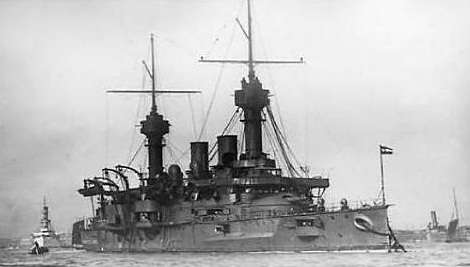
 HMS Vanadis, launched 1862

An emerging threat was Prussia. In the interests of Scandinavian solidarity, a joint Swedish-Norwegian  task force had been offered to Denmark in the first Danish-Prussian war in 1848, although it hadn't taken part. King Charles XV offered military support again in 1864, only to have his offer vetoed by both the Swedish and Norwegian parliaments.

The principal base of the Swedish navy was at Karlskrona, rather than Stockholm, not least because Karlskrona was ice free in the winter and in an excellent defensive position. It was protected by extensive defence works and two large forts, which are still on show today. The main Norwegian base was at Karjohansvern, near Horten.

Hans Busk in "The Navies of the World" (1859, a google ebook) comments that "Considerable attention has been bestowed of late years in improving the materiel and the personnel of the Swedish Navy. The materiel is now also in a very perfect state of organisation." "It comprises 1 rear-admiral, 1 commandant, 3 captain-commandants, 12 captains, 12 lieutenant-captains, 24 lieutenants, and 33 sub-lieutenants, together with 350 petty officers and marines, (46,000 men comprising 20,000 Swedes and 13,500 Norwegians)."

Swedish Navy (1859)

HMS Stockholm (1856)

Ships of the Line (60-80 guns) - 2 screw, and 5 sailing, with one being built
Frigates (22-60 guns) - 1 screw and 5 sailing sailing
Corvettes (18-24 guns) - 3 screw and 5 sailing . Two of the sailing corvettes on "foreign station"
Gunboats - 2 screw (6 building), 13 sailing (schooner rigged), 76 rowed, large, 122 rowed, small
8 mortar vessels
I gun brig,
besides a large number of  transports, and 8 or 10 small steamers.

Norwegian Navy (1859)


2 steam frigates, one of 52 guns being built, the other of 41 guns,
2 sailing frigates (40 and 44 guns)
3 steam corvettes, (20, 14 and six guns) , 2 sailing (16 and 10 guns).
1 brig; 6 schooners; 4 small steamers, 2 steam gunboats (each of two guns), 121 row gun-boats of 1 or 2 guns, kept onshore under sheds until required.

This was a time of transition for the Swedish navy, as for many others, as can be seen by the ships ordered.

New vessels 1852 - 62  - Steam and Sail

HMS Valkyrian (1852) - a Swedish steam corvette, built by Karlskrona shipyard. She was built of wood, had three masts and could hoist 489 m² of sail. By 1872 she was disarmed and relegated to a transport ship.

HMS Oradd (1853) - "Fearless", a steam corvette. Returning from Le Havre, where she had been delivering exhibits for the 1866 Paris World Fair she was wrecked at Dungerness Light House, on the 3rd of December, with the loss of 12 men.

 The wreck of HMS Oradd, 1866

HMS Hogland, Svensksund, Carlsund, Motala, Aslog, Astrid, Alfhild and Inggerd (1856- 62)  - "2nd class" gunboats, built at the Motala shipyard. They were built of wood and steel, and equipped with two masts with up to 270 m² of sail. Between 1866-1867, the two 226 mm mounted guns were removed and replaced with a 96 mm gun and got the sail area increased. At this point they had a crew of 31 men.

HMS Stockholm (1856)  - a ship of the line, steam and sail powered, her propeller could be hoisted inside the ship for shallow water. She carried 62 x 30 pounder guns, and 6 x 7.62 inch bomb cannons

HMS Norrköping (1858)  - the last sailing frigate, with a sail area of 1,661 m². She carried 18 x 30-pounder guns, and 6 x 1/2 inch bomb cannons

HMS Vanadis (1862) - the first and only steam frigate, with three masts, one 46m tall, and 1,643 m2 of sail. Although almost obsolete in one sense, she proved to be remarkably useful in another. Like any navy, one function of  the Swedish was to show the flag, so in 1869 the Vanadis was Sweden's representative at the opening of the Suez canal. In 1878 she collected the last governor of Sweden's only Caribbean colony, Saint-Barthélemy, before it was handed over to France and in 1883-85 she circumnavigated the world, making extensive scientific surveys of magnetism, hydrology and more.

New vessels 1865 - 72 - Ironclads

HMS John Ericsson

The 1862 battle between the Monitor and Virginia send shockwaves through the naval world, not least in the Baltic where it was quickly realised that the comparatively calm and shallow seas ideally suited "monitors". Here Sweden hit the jackpot, as the designer of the USS Monitor was a patriotic Swedish expat, John Ericsson. who was happy to share his designs with his homeland. The Swedish Navy sent over Lieutenant John Christian d'Ailly, who returned with an improved Monitor design. The first ship built was christened HMS John Ericsson by a grateful nation.

The five ships of the John Ericsson class were designed for coastal defence, though a squadron was sent on a visit to the Russian naval base at Kronstadt in 1867, partly in the spirit of international fraternity, partly no doubt to demonstrate that the Swedes could come knocking at the door if the need arose. Otherwise they stayed in coastal waters, and in fact were only commissioned for 2-4 months every year during the summer and autumn. Depending on the political as well as atmospheric climate, some years they were not commissioned at all, the Tirfing was only active in 1867, 1873, 1880, 1885 and 1888–89 and the First World War.

The John Ericsson was armed with two huge 381mm Dahlgen guns which fired either a 200kg solid shot or a 160 kg explosive shell. In 1877 these were supplemented with a pair of 12mm machine guns. The other ships in the class were the Thordön and Tirfing (2 x 267 mm smoothbore guns), the Mjølner (2 x 270mm Armstrong guns) and the Loke (2 x 240 mm). The Loke, launched in 1871, made only seven short cruises in her whole career, being placed permanently in reserve in 1880. Despite their shallow draft the Thordön and Mjølner both aground at some point in their career, the Mjølner  only being freed when her ammunition, iron ballast and 120 tons of coal were removed.

 HNoMS Skorpionen

Meanwhile, the Norwegians had been designing ironclads themselves, launching the HNoMS Skorpionen (2x 267mm guns), in 1865. Plans to build more Skorpionens were abandoned and the Mjølner above was paid for, and used by, the Norwegian navy. However the Norwegian HNoMS Thor, built in 1872 was basically an improved Skorpionen.

As with any new technologies, trial and error is needed to perfect the design. HMS Garmer (1867) was designed as a smaller version of the Monitor, for island archipelagos and inland waterways. However, her single 267mm gun had to be aligned with the hull to be fired, which was not very practical. Another river  monitor, HMS Skold, (1868, 1 x 267mm smoothbore) had a novel engine arrangement whereby she could be powered entirely by the muscle power of her 24 man crew, sitting on benches using a levers and crank system to move at all of 2 knots. The system was not used elsewhere.

Friday, 31 August 2012

Austrians & Boxers 1900, Part 3


Introduction

In 1900, China was teetering on the edge of being a "failed state". A huge rural rebellion, known in the West as the "Boxer" rebellion, was sweeping the country, ostensibly against foreigners and Christians, the latter being murdered in large numbers. The weak Imperial government, unsure whether to utilise, or stamp on, the Boxers gave them free reign, so much so that by 1900 the foreign embassies, or "Legations" in Peking were under siege. Fortunately, enough sailors and marines had been scrapped together from foreign warships on the coast to give the bare minimum of defence. There were British, Russians, French and Japanese, but this is the story of the Austrians, with details form Indiscreet Letters from Peking by B.L. Putnam Weale.

SMS Zenta in 1900

The only Austro-Hungarian force available to go to the aid of their legation was from the cruiser SMS Zenta. Consequently, Captain Thormann with several of his officers, 30 men and a machine gun made their way to Peking, where they were trapped in the Siege. Their adventures up to this point are described here and here. We take up the story on the 10th of July.

10th July

Putnam Weale details the various "artillery" available to the defenders. He is not impressed. After the Italian one-pounder ("absolutely useless", "merely a plaything") he describes the Maxim machine gun the Austrians had bought from SMS Zenta...

" a very modern weapon, and throws Mannlicher bullets at the rate of six hundred to  the minute. Yet it, too, is practically useless. It has been tried everywhere and found to be defective. When it rattles at full speed, it has been seen that its sighting is illusory, that it throws erratically high in the air, and that ammunition is simply wasted. It cannot help us in the slightest. The value of machine-guns has been always overrated. "

This was together with a British Nordenfeldt ("absolutely useless and now refuses to work") and an American Colt ("so small, being single-barrelled, that it can only do boy's work. Yet this Colt is the most satisfactory of all, and when we have dragged it out with us and played it on the enemy, it has shot true and straight They say it has killed more men than all the rest put together").
There should have been a Russian field gun, but although 1,000 shells were bought, the gun itself was somehow left in Tientsin Station. Putnam Weale suspects that there had been a deal done between the Chinese and Russian that the Russian legation would not be attacked.

13th July

 Austro-Hungarian naval officers in China

The Chinese exploded a huge mine under the defences, burying the French Commander, the Austrian Charge d'Afaires and four French sailors, but they had a miraculous escape. A second explosion just afterwards somehow shifted the rubble so all but two French sailors could be pulled clear. Following this there was bombardments and rifle fire all along the defences, but they still held.

16th July

The bombardment still continued. Putnam Weale notes that Captain Thormann of the Zenta was killed a few days before, "while he was encouraging his men to stand firm". There has been speculation about this ever since, that Thormann had earlier had a from of nervous breakdown, and how sought death on the parapets. We´ll never know.

The constant bombardment, sniping continued until the final day......

August 14th 1900

Surprised by the sudden quiet, Putnam Weale and some others creep out into the city.....

 The Austrian Legation after the siege

"Still not a sound, not a word. A little encouraged, we crept more valiantly into the Austrian Legation, and stood amazed at the spectacle. Rank-growing weeds covered the ground two or three feet high ; all the houses and residences had been gutted by fire, everything combustible burned, leaving a terrible litter. But the brickwork and stonework stood almost intact, and the tall Corinthian pillars with which it had been the architect's fancy to adorn this mission of His Most Catholic Majesty, stood up white and chaste in all this scene of devastation and ruin; they might have dated from centuries ago. Broken weapons, thousands more of brass cartridges, and sometimes even a soldier's blood- stained tunic could be seen among the weeds. This must have been the site of another camp of Chinese soldiery. Abandoned straw matting showed where rough huts had once been built line upon line. But all these hosts had flown."

Moving on they discovered, to their joy, the advancing Relief Force, although that wasn´t initially clear......

"Dense bodies of men in white tunics and dark trousers were debouching into the street, thousands of yards away, and were then marching due east that is, towards the Palace. They came on and on, until it seemed they would never cease. What were these newcomers ? Were they white troops at last, were they Bannermen of the white Banners? . . . They might be anything, anything in the world, but they might be ... Yes, without a doubt they might be ordinary Russian infantry of the line. Russian infantry of the line! "

It was over.


The Relief of Peking

The first International attempt to relieve Peking, the Seymour expedition having been shown to be hopelessly outnumbered, the allies upped the ante. A fleet assembled outside the port of Tianjin/Tientsin and on June 17th the Taku Forts protecting the city were stormed. This was a gamble, the shallow river Hai meant that only 9 of the smallest vessels in the fleet could used, so only 900 men against four forts and about 2,000 Chinese. Matched in artillery the allies stormed the forts one by one. The northwestern fell to waves of 200 Russians/ Austrians, 380 British and Italians and finally, 300 Japanese, who actually captured the fort. Its guns were then turned on the northern fort, which fell to the British and Italians. The fire power of both captured forts, and the fleet, was turned to the southern forts, and the Chinese fled. Now Tianjin was besieged by the Boxers, but they were driven off and the allies controlled both the port and its defences.

 Russian troops in the Peking relief expedition

With Tianjin under their control, large numbers of troops were bought ashore.and about 20,000 marched on Peking, under the command of British Lieutenant-General Alfred Gaselee. It was a real mixture - 8,000 Japanese (who had already proved themselves in the capture of Tianjin), 4,300 Russians (infantry, Cossacks and artillery), 3,000 British (mostly from India), 2,500 Americans and 800 French from Indochina. This sounds impressive until you consider that there were 70,000 Imperial troops and 50,000 to 100,000 Boxers between them and Peking! Fortunately they didn't have to fight their way through. Whilst there were many cases of stragglers being ambushed and murdered, only two small battles took place, at Beicang and Yangcun, on the march.

Arriving at Peking there was considerable rivalry between the "allies" to be the first to liberate the Legation Quarter. Each of the Japanese, British, Russians and Americans each assigned a gate into the city. The British won, wading through a drainage canal, and were greeted with loud cheers.

The battle for Peking wasn't quite over,, but on the 28th the allies held a victory march through the Forbidden City, marking in the most emphatic way possible, who had won, and who had lost.

Austrians elsewhere in China

Seventy-five members of the crew of the Zenta were part of the ill fated Seymour Expedition to Peking to rescue the Legations, and their comrades, only to be forced back.

 The SMS Kaiserin und Königin Maria Theresia

Zenta was joined by the armoured cruiser SMS Kaiserin und Königin Maria Theresia, and 160 sailors from both ships (and two landed guns) were part of the assaults on the Taku forts which defended the entrance to the port of Tientsin (Tianjin). The crew of the SMS Kaiserin und Königin Maria Theresia incidentally included Georg Von Trapp, of Sound of Music fame, who was decorated for his actions.

Meanwhile in Tientsin (Tianjin) were 2,400 allied troops, mainly Russians but others as well. After the Taku forts were taken the Boxers attempted to storm the city, all but destroying the French quarter and only being back with heavy losses by the Russians. On June 18th 175 Austrian, British, German, and Italian troops sortied across the river and captured eight guns,and killed the defenders, which eased the situation until forces could arrive from Taku.

Over the following months several other Austrian cruisers arrived in China, including the SMS Kaiserin Elisabeth and SMS Aspern, and their sailors were also part of various policing and mopping up operations, up to 500 men being involved in all.

Finally, in June 1901 the Kaiserin Elisabeth and Zenta were sent home, the S.M.S. Kaiserin und Königin Maria Theresia and S.M.S. Aspern remaining on station. The Zenta arrived back in the Austrian base of Pola in October, where she was awarded a silk Flag of Honour in recognition of the actions of her crew in China.

As well as a huge indeminity paid to all the allied powers, the Austro-Hungarians actually gained territory as well, a sort of mini-Hong Kong of 150 acres at Tianjin. Although small, their first Asian colony still had 30,000 people, who became Austro-Hungarian citizens, and were under Austrian laws. It lasted until 1917.

Wednesday, 29 August 2012

From the Black Orchid to Defiants - West Malling airfield 1932-41

West Malling airport had been a civilian site in the interwar years. After obtaining a licence as a permanent airfield in 1932, it had officially opened in 1933 as Maidstone Airport, with a speech by the Marquis of Douglas and Clydesdale and a flypast by three Vickers Virginias and two Hawker Audaxes from RAF Manston. The airport offered flying classes with a Puss Moth, Fox Moth and Gypsy Moth.

 Vickers Virginia bomber. Although it's huge size made an impression on the crowd at West Malling, it wasn't terribly effective, and was very unnreliable. Nonetheless, it remained in active service until 1940, when the suggestion was made that it be mounted with cannon as a gunship against invdaing tanks. Fortuntely that was never tried.

Unfortunately, in 1934 the managing director, "Count" Johnston-Noad was jailed for a month for non-payment of rates. Johnston-Noad was an adventurer - in the good and bad senses of the word. In the 1920s and early 30s, he was famous as a speed boat racer, but he later turned to scams and crime.  He was eventually jailed for 10 years for fraud, which he served, improbably, with the atom spy, Klaus Fuchs, later giving a newspaper article describing his jail mate (http://newspapers.nl.sg/Digitised/Article/straitstimes19590628.2.72.aspx). Meanwhile, his beautiful 2nd wife, Thelma, was known in the underworld as the "Black Orchid" and was involved in a number of frauds and thefts, most famously an £8,000 diamond robbery in Hatton Garden in the 1950s. She committed suicide in 1955 with her lover whilst on the run from the police. Unfortuantely, we haven't managed to find any photos of the Johnston-Noads.

In 1935 the airfield was taken over by Mallling Aviation, and perhaps to avoid association, the name was changed to the Malling Aero Club. Despite this inauspicious start, Maidstone Airport went on to play host to various airshows, and even saw the famous Amy Johnson. Another Gypsy Moth was purchased in 1939, only to crash in nearby Borough Green shortly after.

With war approaching the airfield was taken over by the RAF and set up as an advanced landing field for Biggin Hill. It was upgraded with a concrete runway, and anti-aircraft guns and searchlights. The first aircraft were Lysanders, photo reconnaissance planes, on June 8th 1940.

 Boulton Paul Defiant with turret behind, but unfortunately, no guns in front. Usless against modern fighters, but actually quite good against bombers

On 12th July 141 squadron arrived equipped with Defiant fighters, only for tragedy to strike a week later with 6 of the 9 planes shot down over the Channel, exposing the Defiant as almost useless against modern fighters. On July 25th the 3 surviving planes were evacuated to Scotland.

This disaster was followed by heavy air raids. On August 10th a single bomber took the defences by surprise and 17 builders were injured, one dying. Heavier raids on the 15th, 16th and 17th of August and on September 10th, caused so much damage that it was only on October 30th that Spitfires of 66 Squadron could be stationed there, soon joined by Hurricanes of 421 Flight, though both were soon stationed elsewhere, to Biggen Hill and Hawkinge.

For a while, West Malling was mostly used to receive damaged fighters or bombers. Of both sides. At one point in 1940 a flight of German FW109s, believing that by crossing the Thames estuary they had crossed the Channel, started coming into land! The first crash landed in a nearby orchard, the 2nd taxied right up to the control tower before either side realised he was in the the wrong country! Fortunately, a Beaverette armoured car was nearby and held him prisoner. Then yet another FW190 came in. He realised his mistake and tried to take off, but the same Beaverette chased him and shot up the plane, even then the pilot tried to run away and in a brief punchup was laid out by the station commander.

 Beaufighters

On Aprils 27th 1941 the Beaufighters of No.29 squadron were stationed in West Malling (a road nearby was later called Beaufighter Road). The Beaufighters were used as night fighters against bombing raids, with considerable success.  One of the pilots, the famous Guy Gibson, said "Of all the airfields in Great Britain ... we have the most pleasant".