Showing posts with label Kent. Show all posts

Wednesday, 1 February 2017

Kent Trained Bands in the Civil War


The trained bands were, basically, the militia. Although “trained” seems to have sometimes been a slight exaggeration, they were organised and equipped and so an important resource in the lead up to Civil War, especially as there was no significant “national army” at the time. By far the most important were those of London, which had a significant effect on the course of the war. The trained bands in Kent were much smaller, but they did have the advantage that, unlike those of some counties, they could be deployed outside their county.

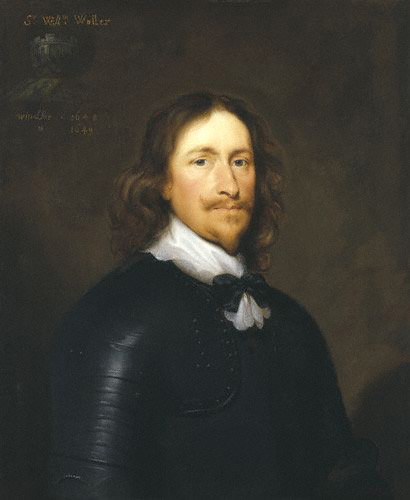
WilliamWaller.jpg 
William Waller


The situation in Kent

Kent was a deeply divided county in the Civil War. Although nominally under Parliamentary control, there were risings in Tonbridge and Sevenoaks in 1643 (see an earlier blog), Canterbury in 1647 and a major uprising in 1648, culminating in the Battle of Maidstone. The Trained Bands however remained firmly in Parliamentary control, even in 1648, and formed part of the Southern Association under Sir William Waller (who was born in Knowle House in Sevenoaks in Kent).

Organisation
 
The Bands were organised into “lathes” or areas, a system unique to Kent and possibly dating to the time when Kent was an independent kingdom1, which might also explain the naming system, as even a cursory glance at a map shows that these are not the most significant places in Kent, and nor were they in the 1640s. Anyway, there were five in total, basically dividing the county north to south. Working from west to east;
Sutton at Hone – adjoining London, including Blackheath, Bromley, Dartford and Westerham
Aylesford – from Chatham and Rochester in the north  to Tonbridge in the south, with the county town, Maidstone.
Scraye – a more rural area, though including Ashford and Faversham. Parts of the Lathe seem to have been strongly Baptist, with in 1670 800 people attending a meeting at Egerton.
St Augustines – Canterbury, and the north Kent ports of Dover, Deal and Sandwich
Shepway – the south Kent ports of Folkestone, Hythe and Romney.

Each area was supposed to supply militia, as well as “auxiliaries” “volunteers” and “Horse”, ie, cavalry.  Note, most of what appears below is from the excellent BCW Project site at www.bcw-project.org.
In 1638 the Kent Trained bands were recorded as having, in total, 4,667 men, with 2,910 muskets and 1,757 corsets (ie. armour for the pikemen) as well as 293 horse. Unfortunately, their equipment was severely criticised just the next year, as many of the muskets didn’t work and the pikes were rotten!

Active history

In 1639 each of the Lathes contributed to a force to be sent north for the ill fated Bishops War in Scotland, 998 men in total. They went by sea, assembling at Gravesend and traveling on naval vessels supplemented with colliers to Harwich where they picked up men from the Essex Trained Bands and sail for Scotland where they were all combined into Sir Thomas Morton’s Regiment of Foot. Perhaps fortunately given the state of their equipment, they were not tested in battle, just occupying the islands of Incholm and Inchkeith, but the regiment did lose 100 men to smallpox.
In 1640 each of the Lathes contributed to a force to be sent north for another “Bishops War” in Scotland, 700 men in total. 

In the Civil War Kent was officially on the Parliamentarian side, with placemen in most of the important positions in the county and the Kent Trained Bands forming part of the Southern Association under Sir William Waller.
Aylesford Lathe  – the Trained Band was initially under Colonel Sir Francis Barnham (the MP for Maidstone) and later Colonel Mark Dixwell, and took part in the Siege Arundel in 1643/4. The Volunteers under Colonel George Newman are recorded at the Second Battle of Newbury in 1643. The Horse may have work blue as they are recorded in 1599 being issued with “cassocks” of this colour.
St Augustine Lathe – under Colonel Sir George Sondes at the start of the war, though he was a Royalist and was later imprisoned and lost much of his estate. He flourished after the restoration and was made Earl of Faversham. His Colonel of Horse, Sir Richard Hardress was initially on the Parliamentarian side and was at the Siege of Arundel, but later he joined the Royalist uprising in 1648. In contrast, the Volunteers were used to put down an uprising in Canterbury in 1647 (their home patch) and one company of the auxiliaries was in garrison in Canterbury in 1648.
Scraye Lathe – under the elderly Sir Edward Hales at the start of the war, the trained band took part in the Siege of Arundel, as did the volunteers under Colonel William Herbert and the Horse. Hale’s grandson was a Royalist and raised a regiment of Horse for the 1648 uprising.
Shepway Lathe – under Colonel Sir Humphrey Hales. The Horse at least were at the siege of Arundel.
Sutton at Hone Lathe – under Sir Francis Walsingham in 1639 and later under Colonel Thomas Blunt. The Volunteers under Colonel Sir William Brooke were at the Relief of Gloucester and later the First Battle of Newbury, in 1643, as well as the Siege of Arundel in 1644. The Horse were initially under Sir John Rivers, though he joined the Royalist uprising at Tonbridge in 1643 (see earlier blog).

1 See www.britishcountyflags.wordpress.com

Sunday, 14 April 2013

Kent - The Coming of the White Horse

After the Roman legions left England the Romano-British were left to their own devices, which would have been fine except for one thing, there were plenty of others willing to take their place, Picts in the north and Saxons on the East. “Saxons” incidentally didn't come from “Saxony”, the word was used much as European settlers described the diverse Native American tribes as “Indians”. In fact “Saxons” covers many different Germanic tribes. There was also no “Britain” as such, or even “England”, as authority broke down. What does seem clear is that the leader opposing the Saxons was called Vortigern.

Vortigern is a bit of a shadowy figure, not least because most of the sources we have now were written  by Saxon writers, and even then many years after the event. Whether is was some sort of overlord of the Britons, or just a local ruler in the south east, he at least controlled the richest region in England, and thus the most tempting target. His response was to hire mercenaries. In 449 he invited a a group of Jutes, from Jutland in Denmark, to serve under his command, giving in return the Isle of Thanet for their use (under his sovereignty of course). The tribal leader, Hengist, agreed. And it worked, Hengist and his brother Horsa, beating off raiders whilst their families built up  a settlement on Thanet (basically the eastern tip of Kent around Margate, which was actually  an island at the time). In fact, it worked so well that Vortigern offered to marry their sister Rowena, cementing ties between the two groups.

Hengist was a bit more ambitious than that. He had seen at close hand how rich, and vulnerable, Vortigern's state was and he hatched a plan. This plan, according to legend, consisted of agreeing to the wedding and when the British party arrived, including of course all the important people in the state, he would butcher then and decapitate the establishment. The plan failed, Vortigern and his brother Catigern, managing to escape with their lives. The stage was now set for a short and bitter civil war, Vortigern raised an army and returned, burning with vengeance.

The Forces

Details are vague and contradictory, but a good summary of current ideas is at deadliestblogpage.wordpress.com/2012/03/22/the-age-of-arthur-part-4/

The British

The Romano British saw themselves as the inheritors of Roman civilisation, defending themselves against barbarians. In the north there were well established legionary settlements, including possibly the descendants of Samaritan heavy cavalry, and firm alliances with local tribes, Unfortunately, in the south there was neither, and defence rested on local levies. Some of the old Roman coastal forts were still strong, but society was not especially martial.

Vortigern probably had a bodyguard of about 150-300 men, the Bucellarii or Teulu, looking similar to Roman light cavalry with mail shirts, swords and javelins. These would have been good troops. But the bulk of his force would have been local levies, organised and armed as a cut-price version of the Legions, in units of 100 with a shield, spear and javelin, but lacking the training or iron discipline of the Romans.

The Saxons

The Saxons were a different force entirely, more akin to pirates, or doubtless adventurers in their own minds. Most in this case came from Hengist's homeland of Jutland, though not necessarily all, as he was already known throughput the Germanic world.

Like the British, the core of the army was a body guard of several hundred men, the “comitatus” or “gesith”, and these were probably the first to arrive. But as words spread of Hengist's successes men swarmed across to join him in Kent.

The “Saxons” were “men with seaxes”, a type of large knife, and this seems to have been a signature weapon, though most had a spear and a circular shield with an iron boss. The wealthy or important had mail shirts, and often a broadsword. And all were professional warriors, more than a match, man to man, for most of the British they would face in southern England.

The Conquest

Again, what happens next is disputed (well, this is the “Dark” ages). But a rough approximation is that, after several skirmishes, the two sides met in 455 at a ford on the river Medway, at Aylesford. The river Medway divides Kent east/ west, with presumably the Saxons arriving from the east, from their base in Thanet, and Vortigern arriving from his territories to the west. Details are unclear, but it seems to have been hard fought, with Horsa and Catigern both falling, and the Saxons being driven back towards Thanet. More skirmishes followed, with a huge battle at Crayford in 457 which according to the Anglo Saxon Chronicle was a Saxon victory, although by 466 Vortigern's son Vortimer had almost driven  Hengist into the sea, with a climatic battle at Ebbsfleet (“Wippedesfleote”) near Ramsgate. Here Vortimer was killed, and in the resulting power vacuum the Saxons stormed back, finally establishing complete control.  Hengist, and his son Oisc, invited more settlers from back home and established them to the west of the Medway, keeping the East for his own tribe.

The “country” Hengist set up became known as Kent, using his family banner of a prancing white horse on a red background (“Hengist” being “stallion” in Old German). It remained as an independent state, more or less, for over 300  years until it was finally annexed by Mercia in 785.

Sunday, 3 March 2013

Civil War in Kent, 1643

By July 1643 England was 11 months into an increasingly bitter civil war between the supporters of King Charles I (the Royalists), and Parliament (the Roundheads). In some cases this pitched brother against brother, but as a very rough approximation, the cities favoured Parliament, and the countryside the King. This was the case in Kent, mainly Royalist, but next to the huge Roundhead stronghold of London.

Kent was important for three reasons, as a source of Royalist troops, for communications to Dover and the Continent, but also for the Wealden iron working industry. It's hard to see today, but the Weald, an area of about 500 sq miles in Kent and Sussex, was a major source of iron as it had the ore easily available, and trees to provide charcoal. The whole area was dotted with furnaces, and many of the cannon and cannon balls used in the Civil War came from there. The village of Horsemonden, for example, had a furnace employing over 200 men, supplying cannon to the army and navy (and both sides in the Civil War!).

Of course, all this iron had to be moved around, and to get it to London much was shipped along the river Medway. This trade had been become so important that the navigable length of the river had been increased in the 1630s as far as Yalding, although material still had to be transhipped to get past Aylesford bridge downstream. So far therefore the little village of Yalding had mainly experienced the economic benefits of the war - it was about to experience the war at first hand.

The July Expedition into Kent

In July 1643 Parliament in London sent as expedition into Kent, and their report back can be found online at http://yaldinghistory.webplus.net/page38.html .

 Richard Browne (abt 1648)

Approximately 4,000 men, mainly from around Tonbridge, Sevenoaks and Faversham had assembled at Sevenoaks and to quell the "insurrection" London sent 1,800 troops and two troops of Horse, led by Colonel Richard Browne. Even the offical report admits they were joined by few ("but valiant") Gentlemen of Kent. After a failed negotiation at Sevenoaks, the Royalists retreated towards Tonbridge, where on July 24th they made a stand. As the Roundheads approached they found themselves under sniper fire...

"the Londoneres following them; who when they came within two miles of the Towne, heard Muskets goe off, and the bullets flie about their eares, but saw no enemy, for they had hid themselves in the Woods and Hedges, whereupon the Parliament Forces made severall shot at the Woods and Hedges which frighted them away".

The Royalists now formed up in regular formation in front of the town, near Hilden bridge. After they failed to drive them off by cannon fire ("they discharged a little Drake or two, but to little purpose") the Roundheads under Colonel Browne resorted to musket fire, and although it took a "very hot fight", soon the Royalists broke and fled into Tonbridge, where 200 were captured. The rest fled along the line of the Medway to Yalding, pursed by the Parliamentarian cavalry, "and good execution was done upon them".

At Yalding (Yawling in the text) the surviving Royalists, approximately 600 now, again made a stand. The Roundhead commander, Sir Miles Levesey, surveyed the scene and

"drew such forces of horse and foote as he had together, and planting his Ordnance for battering the Towne, drew neere himselfe with his power. His Ordnance were so planted, that hee might have beate the Towne upon the enemies heads, but being unwilling so to doe, if by treaty he could bring them to accord; hee summoned them, promising they should enjoy the benefit of the Parliaments Declaration, if they would submit and lay downe Armes."

Levesey's artillery set up on Burgess Bank, across the river from Yalding church, and despite his claim to have spared the town, at least a few cannon balls have been found in the Royalist positions. Initially the Royalists refused to surrender, but some slipped away as night fell, and next morning Levesey sent a Master Godfery to negotiate. Outgunned, outclassed and outnumbered, 300 of the Royalists fled and the rest surrendered, .

Participants and forces

Parliamentarian

An account from the Parliamentarian tax collector in the area, Thomas Weller of Tonbridge, describing his (very personal!) version of the lead up to the battles here can be found at
http://www.tonbridgehistory.org.uk/events/civil-war.html

The Parliamentary expedition consisted of 1,800 men and two troops of horse. The vast majority of the Parliamentarian troops seem to have been Londoners, probably from the London Trained Bands. Trained Bands were militia, technically part time soldiers, but those from London were some of the best troops available in 1643, well equipped and trained by professional soldiers. With the onset of war 6 regiments had been formed, distinguished by their colour of their flags: Red, White, Yellow, Green, Blue and Orange.

Richard Browne was Colonel of the Dragoons of the London Trained Bands, and senior Captain of the Orange regiment. It seems likely therefore that the troops were at least in part from the Orange regiment, and the Horse were dragoons. The year after the events described here Browne was made Serjeant Major General of the Counties of Oxon, Berks, and Bucks and by 1649 he was Sheriff of the City of London. However, he became disillusioned with Cromwell's Protectorate and he was one of those who welcomed back Charles II, eventually resulting in his being awarded a baronet in 1660.
http://www.british-civil-wars.co.uk/biog/browne.htm

Sir Miles Levesey seems to have been more Kent based. In 1644 he is recorded bringing a regiment of horse from the county to assist the siege of Arundel Castle and in 1648 he won a battle at Kingsdon against the Duke of Buckingham. In 1649 he seems to have been in charge of the forces in Kent, as it was he who was ordered by Parliament to disband most of the military there.

Royalist

Despite the attempts of Weller, especially, to portray the Royalists as bandits, some at least seem to have stood up well to the London Trained bands, and to have been equipped and trained as a proper army. Levesey captured at Yalding..

 "a good quantity of Muskets, gilt Swords, Pistols, Pikes, and Collivers, enough to arme six hundred men, besides seveteene pieces of Ordnance mounted, and as many dismounted, many barrels of Gunpowder, and foote Colours, he tooke one hundred and fifty good horse, besides those conveyed away, but since disclosed."

There seem to have been no cavalry, or if there were, they didn't hang around to protect the army after Tonbridge. There was also no clear commander, which was probably part of the problem. One of those who took part was Thomas Farnaby, scholar and former solider in the Low Countries. He was captured later and imprisoned in Newgate prison, but released in 1645.

This was more or less the end of military activity in Kent in the Civil War, until the great revolt of 1648, but that's another story.

Wednesday, 15 August 2012

The Buffs at Kota Lama, 1876

In the previous blog I describe an interview with Robert Whiting, a veteren of the 3rd (East Kent) Regiment, the "Buffs". Talking in 1940 he describes his soldiering days in the 1870s & 1880s. One of his campaigns was in the Malay state of Perak in 1876 - a typical action involving the Buffs is here described in the London Gazette. It is strangelly reminiscent of actions in South East Asia 100 years later.

The London Gazette 18 February 1876 Issue number 24296
Camp, Qualla Kangsa, January 5, 1876.

SIR,

I have the honour to report that yesterday morning the force was taken by me for the purpose pf disarming the village of Kota Lama 1 1/2 miles distant, on ihe opposite side of the Perak River. This village, in July last, was visited by Mr. Birch, when the inhabitants came down in considerable numbers, loading their arms, and warning him not to come near. Having no force with him, he was obliged to withdraw. For long this village has been the haunt of all the worst disposed and turbulent Malays. The Queen's Commissioner, deeming it necessary to disarm the inhabitants and to destroy the houses of certain known leaders, I made the following arrangements.

The village of Kota Lama is on the left bank of the river. Lieutenant Colonel Cox crossed with his party (Royal Artillery, 12 men and 1 gun; the Buffs, 10 men; 1st Goorkhas, 25 men) in boats, and moved up the bank a little more than a mile, when he extended the men, the left of the line keeping close to the river, and skirmished through the village.Mr. Maxwell, Deputy Commissioner, accompanied Lieutenant Colonel Cox.

Captain Young moved his party (The Buffs, 50 men, 1st Goorkhas, 20 men) in a similar manner up the right bank, to a village of the same name; his orders were to collect any arms, but not to destroy or injure houses or property, as the inhabitants have been well disposed. Captain Speedy, Assistant Commissioner, accompanied Captain Young,

Major McNair, I, and my staff went with Captain Garforth's party of the Naval Brigade (32 men) in three boats . We landed on the left bank just above the village, and, leaving a few blue jackets in charge of the boats, we moved in the direction of the village, expecting there to find Lieutenant Colonel Cox's party. Twenty bluejackets landed with us, and we were joined by Lieutenant Hare, R.E., with 4 Goorkhas, who had been assisting him to measure the distance along the bank.

We proceeded some distance before we came to some houses which I desired should be searched for arms, they were, with few exceptions, deserted ;after about an hour and a half we came upon several houses close to each other, the largest being occupied by women and children. It being necessary to ascertain whether any men also were in it, Major McNair sent in two of his Malay followers, and himself looked in. After satisfying himself that there were only women and children, he had just got down from the steps, telling those inside not to be alarmed as they would not be harmed, when we heard several shots, and from a jungle close by some 50 Malays rushed out upon us, a few with fire-arms and the rest with spears.

 Naval Brigade sailors taking on Malays during the Perak campaign (Illustrated London News)

The attack was so sudden that we were almost surrounded and had to retire. The conduct of the marines and sailors was deserving of all praise. If it had not been for their steadiness few if any of us would have escaped. As it was I reget to say that our loss was heavy in proportion to the numbers engaged.
Just before this attack was made several officers moved away in the direction of the river, a hundred yards distant Major Hawkins was, it was supposed, following them  when he was fatally wounded with a spear. No one seems to have seen him fall, but Captain Garforth reports that William Sloper, A.B., came up to him on the ground, shot two Malays who were coming towards him, and stopped with him until Major Hawkins said "Save yourself ; you can do me no good now."

Major Heathcoate, who with Captain Badcock, Lieutenant Preston, and Major Twigge, had gone on in front of Major Hawkins towards the river, turned back with these officers and tried to move them, but they had to fall back to the river, before the superior numbers who were getting round them.

Surgeon Townsend was the first to be assailed, he being a little advanced ; three Malays assailed him with spears, the centre one he shot with his pistol, and the man falling forward upon him knocked him down. The other two Malays were driving at him when Harry Bennett, A.B., and William Thompson, A.B., rushed forward and killed them both. The conduct of the three blue jackets abovenamed has been specially brought to my notice, but all behaved admirably in a very difficult position, and very great credit is due to the three officers, Captain Garforth, Lieutenant Wood, and Sub-Lieutenant Poar, who directed and led them.

Lieutenant-Colonel Cox's party had gone all over the ground on which this occurred, and it is supposed that our opponents must have made for the jungle on the approach of the skirmishers, and returned after they had passed. Lieutenant- Colonel Cox returned through the village in the same order, and having destroyed every house that he passed, arrived here about half-past two o'clock, without firing a shot.

Captain Young's party returned about the same time without having met with any opposition. The bodies of five Malays were found, and I have reason to believe that their loss must have been greater. The close and hand-to-hand nature of the engagement is shown by all the casualties having been caused by spear wounds.

I have, &c.
(Signed) J. ROSS,Brigadier-General, &c.
P.S.—A large quantity of arms, spears, muskets, and small wall-pieces were taken, and a large iron 12-pounder gun was spiked and thrown into the river. A list of arms taken shall be forwarded.

A Veteran Remembers - part 1

It's 1940 and from your home in Australia you hear daily news reports of bombs landing on your native Kent, with invasion threatened to roll across the land. War is very much in the air and everywhere young men are joining up. You think back to all those many years ago when you did the same, 70 years ago -  Prussians were threatening Europe even then.

In January 1940 Bob Whiting gave an interview to the The West Australian newspaper. This is based on his interview.

Battles Long Ago. A Veteran's Memories
The West Australian
26 Jan 1940


Private of the Buffs. History comes very much alive again, and there is the sound of invisible drums and trumpets in the air, when you are talking to a certain grand old veteran, Bob Whiting, Private of the Buffs, the oldest soldier in Western Australia. Except for his 93 years there is no thing of the nonagenarian about Robert Austin Whiting, Private No. 2018. His stalwart body still has strength and suppleness, and there is a suggestion of rugged indomitableness in every line of it. His grizzled head is firmly poised, and his kindly old face is alert and full of character. Bob Whiting, doyen of all old campaigners now living in this State, is a sociable chap who loves to sit on the verandah of his East Fremantle home and swap reminiscences with other sociable chaps who drop in for a yarn about the brave days dead.

Robert Whiting

 It was in the year 1870, when the Prusslans were spreading the desolation of war over the smiling countryside of France, that Bob Whiting took the King's shilling and enlisted in the British Army as a full private in the 1st battalion of the old 3rd Regiment of the Line, now the East Kent Regiment, popularly called the Buffs on account of the former colour of the facings on their tunics. Besides being the oldest soldier in Western Australia, Private Whiting is the oldest living Buff anywhere in the world. He was born at Maidstone, Kent, on March 22, 1846, the year of the great Irish famine and of the repeal of the Corn Laws. Soon after he had "'listed for a soldier," in his early twenties, Bob Whiting was drafted out to India, and remained at various stations there until 1875. During that year and the next he took part with his regiment in the hazardous Malay Peninsula campaign, and was awarded the Perak medal, with bar........ (to be continued)

The Perak Campaign

James Birch in Perak

In the 1870s Malaysia was not a single state but a network of native Sultanates with a three British enclaves, Penang, Malacca and Singapore. British influence over the Sultanates was gradually increasing, so that in 1874 The Pangkor Treaty was signed with Perak in the north, allowing a British Resident to take over government administration. That Resident, James Birch arrived in 1875 and set about many reforming the government, especially by outlawing slavery and improving tax collection. Both of these hit the economy of the local chieftains and in July, whilst visiting up country at Passir Salak, Birch and his bodyguards were murdered under the orders of the local chief, and slave trader, Dato Maharajaleda. The British response was swift and crushing, the Perak War.

The British garrison in the Malay states was small, but troops were shipped in from other bases in India. Troops from the 80th Foot arrived from Hong Kong via Singapore in November and were shortly joined by a task force under Brigadier General J. Ross from India. Ross's force was a mixture of the 1st Gurkhas, the Madras Sappers, some Royal Artillery, and a strong Naval Brigade, supported by HMS Egeria, Fly, Modeste, Philomel, Ringdove and Stirling. Last, but certainly not least, he had the 1st battalion of the 3rd (East Kent) Regiment of Foot, based in Calcutta, Bob Whiting's battalion.

Arriving in Penang in late November the Buffs set about preparing for Perak, and presumably for Christmas, though their hopes in that regard were to be dashed. Christmas for 200 men of the battalion was spent down in Malacca were they were sent to put down a Chinese riot.

Meanwhile, Perak had been building up it´s forces, and the Residency was attacked in November, though this was easily repulsed. Elsewhere stockades were built and fortified, especially along the Perak river that formed the basis of the state. On December 10th 1875 the British started to move, the 10th Foot storming and defeating a stockade of 400 Malays only 5 miles from the Residency. The coast secured, in January the Expeditionary force started up the River Perak, checking villages and stockades as they went -  a typical action for the Buffs is described in the extract from the London Gazette below.

 British forces camping at Passir Salak 1876

By the end of February, Passir Salak was captured and three of Birch's murderers captured. The rest fled upsteam, pursued by a task force of 200 infantry of the 10th and 80th Foot, 40 artillerymen with two steel guns and a rocket tube and a small Naval Brigade of 40 men and officers, transported and supported by 40 boats including HMS Modeste and Ringdove, each with two steel guns on slides and three rocket tubes. 50 "friendly" Malays acted as scouts. The force reached Blanja on March 13th and disembarked, ready to march to Kinta, where the Sultan Ismail was believed to planning a stand. The road or path from Blanja was through virgin forest
 "it is difficult to imagine, but if endless fallen trees, tree roots, elephant holes, streams, swamps, and clay ditches fifty yards long full of, all jumbled together in different combinations of disorder, could be put on paper in it sketch, it would give a feeble idea of the 'road' over which the guns, rockets, and forty rounds of ammunition were dragged, carried, or pushed with intense labour."
Twice the force was ambushed by Malays behind felled trees, but each time the ambushers were driven off, the rocket tubes roving especially effective. After an uncomfortable night in the jungle they reached Kinta. There was some token cannon fire, swiftly silenced by artillery and rockets, and the British entered Kinta without casualty, pointedly taking over the best houses as their quarters.

Aftermath

Sultan Ismail fled again up stream, aiming for the state of Patani, under Siamese not British, protection. He was captured in March after surrendering to the Rajah of Quedah and was exiled to the Seychelles. Dato Maharajalela was found guilty for the murder of James Birch in December 1876 and was sentenced to death by hanging.

By April 1877, Whiting and the Buffs were on their way back to their base at Calcutta having lost eight comrades as casualties (Lt. Colvill, Col. Sergt. Julian, Corpl. Clune, and Privates Neal, King, Killingbeck, Hobbs and Watson). Reportedly, they were very glad to be leaving, the hot humid climate being regarded as unhealthy, with many more men sick in the local hospital. Apparently, the Gurkhas from the highlands of Nepal hated it even more, and were even more desperate to get away.

This was not to be Bob Whiting's last active service with the Buffs, far from it, but more of that another time.

 The Buffs Regimental Ball in Calcutta 1876 - probably not for private Whiting.

Tuesday, 29 May 2012

Nolan, of the Charge, in Maidstone

If you are ever in want of a read with a mid-Victorian flavour, you could do worse than A Soldier of Three Queens by Robert Henderson, published in 1866. Henderson not only writes well and vividly, he had had an exciting life including both the Carlist wars in Spain and the Crimean, as well as various scrapes with card sharps and a spell in a Spanish prison. During this time he had met and married a spirited vivandiere named Jeanette, who had helped him escape the prison by getting the warders drunk. His memoirs are available free online at google books or archive.org.

Here we only have space for two excerpts, Hendersons impression of Maidstone barracks, then a centre for teaching riding to the British army, and his meeting there of the famous Captain (then Lieutenant) Louis Nolan, of the Charge of the Light Brigade.. Although the time isn't defined in the book, it is sometime between 1841 and 1848.

Maidstone Barracks

Maidstone in the 1840s was the main riding school for the Army´s cavalry regiments, and according to Henderson it was far from up to the task. As been said by many others, the long peace between Waterloo and the Crimean tended to fossilise the Army, so that appearance was much more important than military effectiveness.

Maidstone in the 1840s

"During my service at Maidstone I was led into much reflection upon the fitness of the place for the purposes it was designed for, both as regarded its being a nursery

The first thing that struck me was the extreme poverty of design in the whole arrangement, and its utter inefficiency as a cavalry depot for the whole British army. That, in making this sweeping assertion, I may not appear presumptuous, I will give my reasons for what I say, and leave it to men well skilled in such matters to say whether my assertion is proved. Assuming Maidstone to be a place in which the recruit was to be trained for his after-career in India as a cavalry soldier, let us see what was the course adopted; and the means at hand to fit him for his future career.
In the first place, the barracks were so small that men were crowded (packed would more correctly express the stowing away of the luckless dwellers in Maidstone barracks) so closely that I have seen them sleeping on the tables used for dining, or in the coal-boxes. I once had the temerity to say that this school was not big enough to " swing a cat in;" for which I was severely rebuked by a Maidstone veteran, who had been born in the barracks and had passed his life there, hy the reply, "Sir, it was not built to swing a cat in."


When I first went to Maidstone there were no less than five depots there—viz., the 3rd, 4th, and 13th Light Dragoons, 15th Hussars, and 16th Lancers; besides about forty non-commissioned officers and men of the riding establishment. These latter brought their own horses with them. There were two men from every cavalry regiment in the service, household brigade included. Taking the year round, the men of the cavalry depot I should say, averaged four hundred. To instruct these four hundred recruits in riding there were forty horses. But whether a man rode every day, or never crossed a horse until he joined his regiment, was in a great measure dependent upon himself. Assuredly there was, for a very long time after I joined, no method or arrangement in the matter. A smart lad eager to ride could get two and three hours riding a day, if he pushed himself forward; but this was at the expense of many others, less resolute, who never rode at all, and indeed were even ignorant of the way in which to take to pieces that very complicated article a Light Dragoon saddle, and put it together again.

The paucity of horses also rendered it impossible to instruct one-half the recruits in their stable duties. The consequence of recruits not being properly instructed in riding drill and stable duty may be easily calculated by those who know anything of India. The recruit, on his arrival at his regiment, would have a vastly increased amount of physical exertion to undergo, in a climate which renders such over-exertion highly dangerous, particularly to newcomers, or, as they are called in India, "Griffins." He would have to ride for a long time without stirrups, to acquire a seat —would become over-heated and overfatigued. After drill he would, most likely, take off his heavy regimental clothing, put on a pair of light cotton trousers and a light shirt, and sit down on the cold stones in the verandah to cool himself. In a short time you miss him at riding drill, and byand-by hear he has been invalided. In due course he gets back to Maidstone, stops there a few months, and returns to his regiment, to be again invalided. I have known men to go back and forward thus three times in less than five years.
The greatest source of annoyance to me was the bad ventilation and overcrowding of the barrack-rooms, three or four-and twenty — sometimes more — men being crowded into rooms not large enough for half the number. I was always thankful for the reveille and when it was my turn for guard, as the oak floor of the guard-room was infinitely preferable to the close and noisome troop-room.


As to the duties I had to perform, I had nothing to learn. I kept myself very quiet, and watched what was going on. Taking a lesson from what the commandant said to me when I first joined, I especially avoided saying anything about Spain or Portugal. I soon perceived that to burnish a swordscabbard until one could see to shave in it was thought more of at Maidstone than dexterity in the use of the sword itself—to be regular and steady, quiet and orderly, more likely to forward me than the knowledge of the way to manoeuvre a regiment of cavalry in the field. Above all, it was of vital importance never to express a want of belief in the Maidstone faith as regarded riding—which was, that no man who had not been taught at Maidstone to ride, was fit to be trusted alone on the outside of a horse—and that the alpha and omega of equitation was the little riding-school which then stood in Upper Barrack Yard."


Louis Nolan

  Louis Edward Nolan is best known today as the messenger who started the Charge of the Light Brigade at the Battle of Balaclava in 1856. As an ADC,  Nolan was responsible for delivering the order that sent the Light Brigade, about 600 troopers not to attack a target on their left, as intended, but an artillery redoubt straight ahead of then, down a valley lined with Russian guns firing canister and shell at short range, and into another battery backed by cossacks. As Tennyson famously put it....

Cannon to right of them,
Cannon to left of them,
Cannon in front of them
Volley'd and thunder'd;
Storm'd at with shot and shell,
Boldly they rode and well,
Into the jaws of Death,
Into the mouth of hell
Rode the six hundred.


The Light Brigade were annihilated. Who was responsible - Raglan,the British commander, Airey who drafted the order, Nolan who delivered it, or Cardigan who commanded the division, is still debated, though Henderson's recollections below add an intriguing twist. Nolan was killed in the charge and so not available to give his version

Nolan, had already made a name for himself in army circles before Balaclava. He started his military career in the Austrian army, the Royal Friedrich Wilhelm III. König von Preussen 10. Husaren-Regiment, serving with them for 6 years before joining the British army. Possibly, a shared experience for foreign armies made a bond between him and Henderson. From 1840 to 1849 Nolan served with the 15th Hussars in both India and their home depot at Maidstone, where he was made riding instructor to the regiment. In fact he published on this subject, The Training of Cavalry Remount Horses: A New System, 1852.

Nolan was also something of a military theorist, touring Europe to see the training of cavalry in various armies before returning to Maidstone and publishing his next book, Cavalry: Its History and Tactics,in 1853.

Here are Henderson's recollections, from Maidstone in the 1840s...

"The only noteworthy incident that occurred to vary the gloomy monotony of my Maidstone life was the advent to the riding establishment of Captain (then lieutenant) Nolan, afterwards so well-known in connection with the Balaklava charge. In a long and varied experience of men and things, I have never seen a gentleman whose thoroughly amiable temper, kindness of disposition, and really fascinating manner so completely won upon everybody he came in contact with as Captain Nolan. He was a thorough soldier, as well as a finished gentleman.

As regarded horsemanship, he was a perfect enthusiast. There are many who soldier to live. Captain Nolan was a man who lived only to soldier. He had been in the Austrian service; and, like most Continental officers, his manner to those in the ranks, while it forbade the slightest approach to presumption, was so kind and winning that he was beloved by every one. He was a maiirt d'armes of a very good school; and, as there was nobody else of any grade in the place who could fence, I enjoyed the great privilege (for such I considered it) of an occasional bout with Captain Nolan.


On these occasions I had opportunities of conversing with this gentleman which could not otherwise have occurred; and 1 well remember how often I have heard him express his conviction that cavalry could accomplish almost anything, where it had fair scope to act.

I remember even, strange as it may appear, that, in putting a case hypothetically of cavalry charging artillery in a plain, Captain Nolan drew with a piece of chalk on the wall of the quarter-master's store, in Maidstone barracks, a rough sketch which, as nearly as possible, represented the relative positions of the Russian artillery and the British light cavalry brigade, at the battle of Balaklava; the only thing he was not quite right in was the result. He assumed in such a case, the certain capture of the guns. His glorious death at Balaklava prevented his being undeceived in this world
."

Sunday, 29 April 2012

John Brunt VC


Given the British military tradition, and love of beer, it is rather surprising that there is only one pub in the British Isles named after the winner of a Victoria cross, the John Brunt VC in Paddock Wood, Kent.

John Brunt was born in Shropshire in 1922, and in 1934 his family moved to Paddock Wood. The main pub in the town was the Kent Arms and apparently the teenage Brunt was ofter there, so it was apt that this was the pub destined to bear his name.

John helped with the Paddock Wood Home Guard untl he was old enough to enlist as a private in 1941. By January 1943 he was commissioned, and posted to North Africa with the 6th Battalion, Royal Lincolnshire Regiment. On 9 September 1943, the Lincolns landed at Salerno in Italy and Lieutenant Brunt was given command of No.9 Platoon in A Company. For most of December and January Brunt platoon were in action, including on December 15th an assault across the river Asa that earned Brunt the Military Cross.

After R&R in the Middle East Brunt was back in Italy in July, promoted to temporary Captain, and 2nd in command of D company. The Royal Lincolnshires were part of the forces driving the German army back through Italy, and it was a hard slog, with each town being fiercely defended. By December 9th their divsion had stormed the town of Faenza near Ravenna, and established defensive positions expecting a counter attack. It was here that John Brunt won his Victoria Cross.


Ruins in Faenza

The full citation appeared in a supplement to the London Gazette of 6 February 1945:

   " War Office, 8th February, 1945

The KING has been graciously pleased to approve the posthumous award of the VICTORIA CROSS to:—

Lieutenant (temporary Captain) John Henry Cound Brunt, M.C. (258297), The Sherwood Foresters (Nottinghamshire and Derbyshire Regiment) (Paddock Wood, Kent).

In Italy, on the 9th December, 1944, the Platoon commanded by Captain Brunt was holding a vital sector of the line.

At dawn the German 90 Panzer Grenadier Division counter-attacked the Battalion's forward positions in great strength with three Mark IV tanks and infantry. The house, around which the Platoon was dug in, was destroyed and the whole area was subjected to intense mortar fire. The situation then became critical, as the anti-tank defences had been destroyed and two Sherman tanks knocked out. Captain Brunt, however, rallied his remaining men, and, moving to an alternative position, continued to hold the enemy infantry, although outnumbered by at least three to one. Personally firing a Bren gun, Captain Brunt killed about fourteen of the enemy. His wireless set was destroyed by shell-fire, but on receiving a message by runner to withdraw to a Company locality some 200 yards to his left and rear, he remained behind to give covering fire. When his Bren ammunition was exhausted, he fired a Piat and 2 in. Mortar, left by casualties, before he himself dashed over the open ground to the new position. This aggressive defence caused the enemy to pause, so Captain Brunt took a party back to his previous position, and although fiercely engaged by small arms fire, carried away the wounded who had been left there.

Later in the day, a further counter-attack was put in by the enemy on two axes. Captain Brunt immediately seized a spare Bren gun and, going round his forward positions, rallied his men. Then, leaping on a Sherman tank supporting the Company, he ordered the tank commander to drive from one fire position to another, whilst he sat, or stood, on the turret, directing Besa fire at the advancing enemy, regardless of the hail of small arms fire. Then, seeing small parties of the enemy, armed with bazookas, trying to approach round the left flank, he jumped off the tank and, taking a Bren gun, stalked these parties well in front of the Company positions, killing more and causing the enemy finally to withdraw in great haste leaving their dead behind them.

Wherever the fighting was heaviest, Captain Brunt was always to be found, moving from one post to another, encouraging the men and firing any weapon he found at any target he could see. The magnificent action fought by this Officer, his coolness, bravery, devotion to duty and complete disregard of his own personal safety under the most intense and concentrated fire was beyond praise. His personal example and individual action were responsible to a very great extent for the successful repulse of these fierce enemy counter-attacks.
"
   
Tragically, having survived so many desperate actions, Brunt was killed by a fluke the next day. He and his men were having their first proper meal for 48 hours and Brunt was standing in a doorway holding a cup of tea when a mortar round landed right at his feet - he was killed outright.

In 1947, the Kent Arms was renamed the John Brunt VC in his honour.

Thursday, 29 September 2011

Anexio 1216 (3) - The War at Sea

The following is based on a very readable article by Henry Lewin Cannon written in 1912, "The Battle of Sandwich and Eustace the Monk" published in the English Historical Review (vol 27, p649-670) and available online.


From being virtual lord of England in 1216, and proclaimed King, the French Dauphin Louis was now faced with most of his English allies defecting to Henry III. More and more, he was relying on French troops and supplies, all of which had to be shipped across the Channel. Control of the sea was vital.

Eustace the Monk

The French fleet was led by Eustace the Monk, an infamous character then and for many years afterwards. So infamous infact that it´s hard to get solid information on him. For example, it was believed that he had gone to Toledo in Spain to study and master the Dark Arts, as this was the only way to account for his remarkable abilities. He was credited with the ability to render his ship invisible, a "cloaking device" only revoked if he could be killed.

In fact Eustace was born near Boulogne in 1143, the son of a local lord, and he did actually become a monk, at Samur. But the Count of Boulogne killed his father and later seized all the family land, turning Eustace into an outlaw vowing revenge. When the Count joined the French cause, Eustace joined the English in turn. He must have impressed because in 1206 John sent him with 3 large ships and 5 galleys to recapture the Channel islands, taken by the French in 1204. He did this so successfully that he was awarded the islands. He then raided Nornandy, landing at Harfleur and reaching as far as Pont Aldemer before retiring with the French commander, Cadoc, in hot pursuit. Cadoc made the mistake of attacking him at sea, only to lose 5 ships for his trouble. Eustace was now lauded even more in England, with a "palace" in London and a home in Winchelsea - ironically his local knowledge there was to help the Louis escape from the English 10 years later.

John, for all his many faults, seems to have had a knack for attracting talented men, and keeping their loyalty. With Eustace he went too far. Desperate for allies in France he convinced the Count of Boulogne to switch sides, instantly causing Eustace to do the same. John was well aware of this possibility and tried to capture Eustace, but he escaped with 5 galleys and joined the French, or rather Louis. He raided Folkstone and then returned to the Channel islands, conquering them yet again, and with his brothers setting up as virtual lords of the islands.

The ships

The standard ships in the Channel, for trade and war (interchangeably) were cogs. They were clinker built (with overlapping planks), a single sail, and usually a fairly flat bottom which allowed them to settle flat in harbour for unloading. As a defence against pirates they often had high sides. Those caught by pirates were generally killed and thrown overboard so pirates were especially feared and loathed - when they were captured they could expect little mercy. For war, cogs had added towers at each end for archers.

Seal of the town of Sandwich, 1238, showing a cog prepared for war

There are also several mentions of galleys, especially in the service of Eustace. The difference, basically, is that galleys have oars though they might use a sail if the wind was right. They were much more manoeuvrable than cogs and could be equipped with crippling rams making them the warship of choice in the Mediterranean. But they were poor in rough seas and as specialised warships they were hopelessly uneconomic. So, in general, they were uncommon in the Channel, but maybe worth the trouble at times like this.

The main source of ships for the English was the Cinque Ports, a confederation set up in 1155. Basically the towns from Hastings to Sandwich on the south coast were obliged to supply 57 ships for 15 days every year. In return they were given freedom from taxes and a measure of self government. Frankly, self government was taken as a licence to smuggle, but it did give England a reasonably cheap and effective navy.

The War at Sea

Control of the sea lanes was obviously essential for Louis. Eustace had been involved from the start, ferrying war machines over to the Barons even before Louis arrived. And it was Eustace who, with his local knowledge, saved Louis at Winchelsea. But Louis now needed what was, in effect, an invasion fleet. The problem was that, technically, King Philip couldn't help his son as Louis had been excommunicated, but what he could do was make generous "gifts" to Louis's wife Lady Blanche, which she used to hire a fleet and assemble it at Calais.

Since January the English coast had been under the authority of Philip d' Aubigny. The war here took the form of repeated attempts by the French to force their way across the Channel, some successful, some not. On May 15h a French fleet attempting to sail to Dover was met by 80 ships under d'Aubigny sailing out from Romney, including 20 "Great Ships" especially equipped for fighting. The French fled back to Calais, but 25 were caught up with and eight captured. The English fleet then stationed outside Dover.

On Monday 29th May 120 ships were seen approaching Dover from Calais. The English set sail to escape the larger fleet, chased by the French, but the English were quicker. However, when the French fleet turned back for Dover the English fell on them from behind, capturing another eight ships before escaping.

In August William Marshall visited the south coast, alarmed by reports from Calais. He met the men of the Cinque Ports and promised they would receive back all the privileges they had lost under John, as well as a substantial share of any loot from captured ships. As he had done with the army, Marshall did with the navy, numbers increased and moral soared. There were raids on Calais, and counter raids, wins and losses, but French supplies to England were severely disrupted.

The Battle of Sandwich

A contempory, if not hugely accurate, depiction of the battle.

Bartholomew´s Day, Thursday 24th August 1217, was bright and clear in the Channel. The French fleet left Calais "so dense and in such good order it was like a pitched battle". In the lead was Eustace, as guide, but not as commander. This role fell to Robert de Courteney, the French queens uncle. He had selected for himself the "Great Ship of Bayonne" and loaded it with not only all the gold for Louis, but also horses, a trebuchet and many other supplies. In fact it was so over-loaded that water nearly reached the gunwales - it is hard to believe that Eustace would have been so careless if he had been in charge. To protect all this there were 36 knights as well as other soldiers. In fact 3 other ships were guarded by knights, under Mikiius de Harnes, William of St Omer, and the Mayor of Boulogne, about 100 knights in total. As well there there were 6 other Great Ships with men at arms, and about 70 small transports.

The English fleet was led by Hubert de Burgh, Marshall having reluctantly agreed to stay on land. He had 16 ships "well fitted out" and about 20 smaller ones. De Burgh chose the best ship as his own and took a small number of knights from the Dover garrison, as well as a crack crew from the Cinque Ports. Next we have Richard FitzJohn, another illegitimate son of John, and a nephew of the Earl of Warren, who supplied a crew of knights and men at arms. The third ship that caught attention was especially large and rode high in the water as it was lightly loaded. It was crewed by Marshall's men at arms. Roger of Wendover records that there also galleys in the fleet, equipped with iron prows.

Cannon compares the fleets as follows. The French had a large advantage in both ships and knights, as well as, crucially, the wind behind them. All they had to do was make it to port to win. On the other hand, they were very heavily laden and slow. The English had more freedom of manoeuvre. Also, though both sides had excellent leaders in Eustace and de Burgh, Eustace had to defer to de Courteney, which was to prove decisive.

A 13th cog flying the Cinque Ports flag

To have any chance the English had to be to windward, so De Burgh let the French pass Sandwich and then followed them, sailing ahead of his fleet as if to attack and then feinting away. The French by this time were nearly at Thanet, and in good order, all they had to do was keep on going. But de Courteney saw Burgh's ship apparently fleeing and with only a few ships in company, and decided this was easy meat. Ignoring Eustace he turned and bore down on the English alone.

It was, for the French, a disaster. De Courteney's ship struck the 2nd of the English column under FitzJohn and boarded, but the English put up a fierce fight, and soon 3 more ships arrived and assailed the French ship from all sides. The French fleet meanwhile, was all the time being blown further away. De Courteney had given no signal to follow, and when they realised what was happening it was extremely difficult for the French to change course and intervene.

The final straw was the arrival of the massive cog full of Marshalls men. With a height advantage they fired at will into the French ranks, but that was not all. With the wind behind them someone had the idea to throw jars of lime onto the deck, the powder blowing into the eyes of the French. Until now things had been fairly equal, the elite French crew holding their own, but blinded they stood no chance and English troops poured onto the ship. Most of the French knights at least were kept alive for ransom, but for Eustace the situation was different. Both loathed and feared by the English sailors he was found hiding in the hold and executed

The loss of their leaders panicked the rest of French fleet and they bolted for Calais, the English falling on them like wolves. Ships were rammed or boarded, and the crews slaughtered. Nine or ten Great Ships made it back to Calais, but most of the rest, the transports, were sunk or captured.

With part of their share of the spoils the people of Sandwich erected a hospital for the aged poor, as thanks for their deliverance, and named it in honour of St Bartholomew.

Aftermath

Louis was ruined and De Courteney was given leave to go to London and negotiate a surrender. Louis prevaricated, but in the end he signed the treaty of Lambeth. The terms were actually fairly generous - Marshall calming some of the more blood thirsty of his army. In return for free passage home Louis denounced his claim to the throne and returned the Channel Island back to English care. That was it, he was actually given a payment of 10,000 marks as compensation, although that was to be paid by his former supporters in England.

William Marshall's reputation was now even higher than ever, few men were ever as respected in England. He continued as Regent to Henry but, unfortunately, the old Earl, who had served four kings, died in Caversham in 1219 at the age of 72.

After Marshall's death Hubert de Burgh was made Regent of the young Henry III. He married John's widow Isabel until the marriage was annulled, and then the daughter of the King of Scotland. He stayed influential until 1232 when his enemies discredited him and he was imprisoned. From then on he alternated between the Kings favour and his earldom, and prison, but by his death in 1243 he was free.

William of Cassingham was granted a Crown pension and made Lord of the Weald and Sergeant of the Peace, a post he kept until his death 40 years later in 1257.